17 August 2025
By Dr. Ashutosh Das Sharma
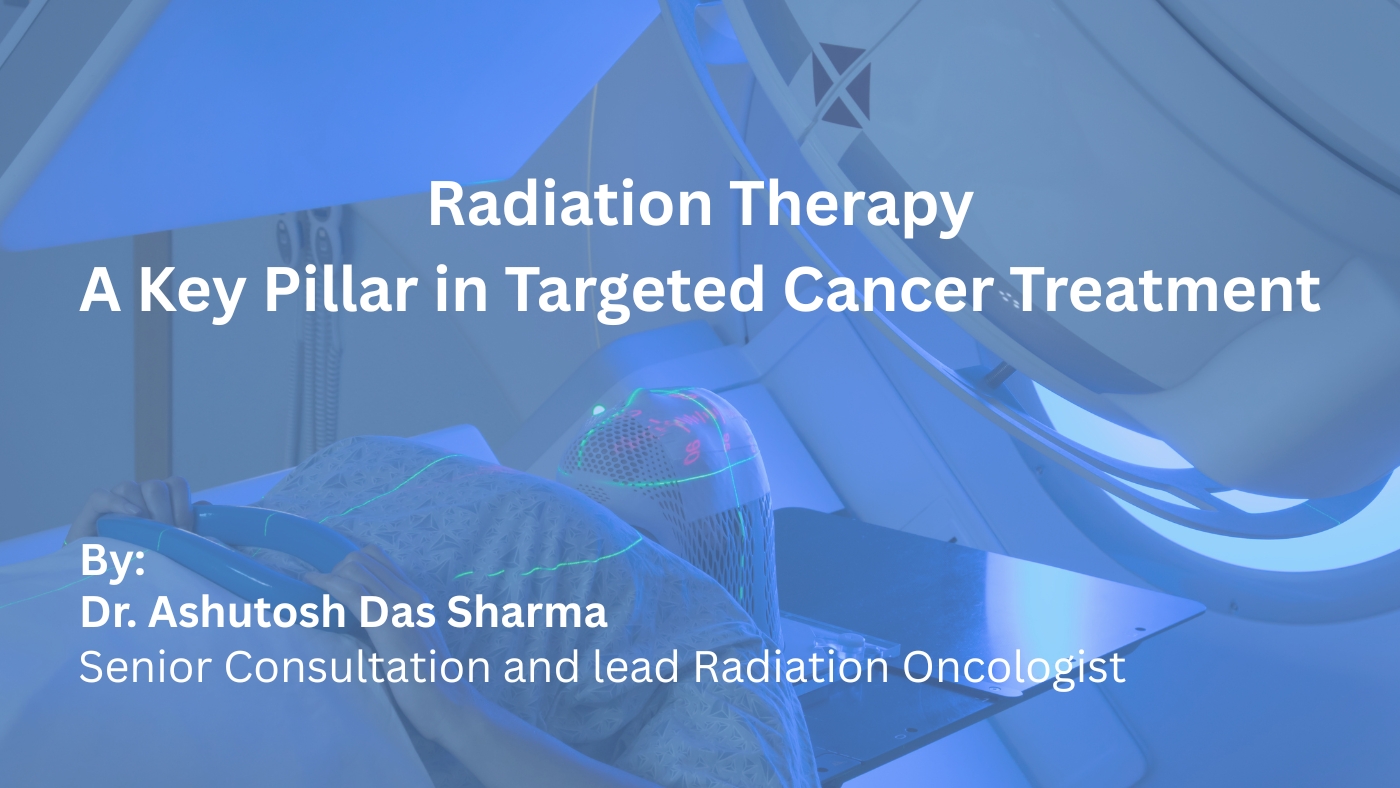
Radiation Therapy – A Key Pillar in Targeted Cancer Treatment
Other Blogs
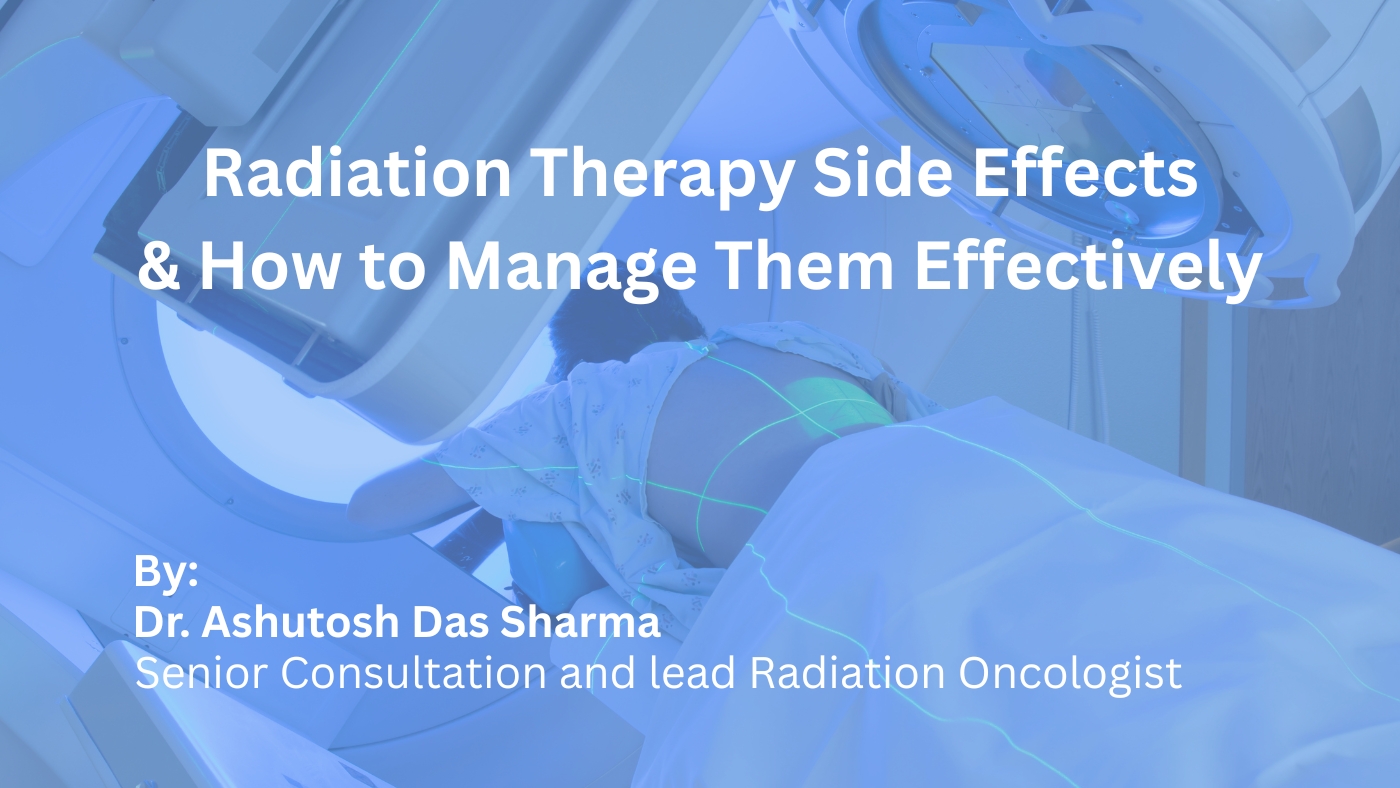
Radiation Therapy Side Effects & How to Manage Them Effectively
16 September 2025
What is Radiation Therapy?
Radiation therapy is a form of targeted cancer treatment that uses high-energy beams (such as X-rays, gamma rays, or protons) to destroy cancer cells while sparing healthy surrounding tissues as much as possible.
It is one of the three main pillars of cancer treatment — along with surgery and chemotherapy — and is often used:
- Alone, as the main treatment
- Before surgery, to shrink tumors
- After surgery, to prevent recurrence
- Alongside chemotherapy or immunotherapy for better outcomes
Why is Radiation Therapy Called a “Targeted Therapy”?
Unlike systemic treatments like chemotherapy that travel through the bloodstream, radiation therapy targets a specific area of the body where cancer is located.
With modern imaging and planning techniques, radiation beams are shaped and directed precisely at the tumor, reducing damage to nearby healthy tissues and lowering side effects.
Types of Radiation Therapy
1. External Beam Radiation Therapy (EBRT)
- The most common form, delivered from outside the body using a machine called a linear accelerator
- Includes advanced techniques like IMRT (Intensity Modulated Radiation Therapy), IGRT (Image-Guided Radiation Therapy), and 3D-CRT (3D Conformal Radiation Therapy)
2. Brachytherapy (Internal Radiation)
- Radioactive material placed inside or near the tumor
- Commonly used for cancers of the cervix, prostate, breast, and head & neck
3. Stereotactic Radiosurgery (SRS) / Stereotactic Body Radiation Therapy (SBRT)
- Delivers very high doses in a few sessions with pinpoint accuracy
- Ideal for brain tumors, spine lesions, and small lung cancers
When is Radiation Therapy Recommended?
Radiation therapy can be used for:
- Curing cancer (definitive treatment)
- Shrinking tumors before surgery
- Killing residual cancer cells after surgery
- Relieving symptoms (pain, bleeding, breathing difficulty) in advanced cases
- Preventing cancer recurrence in high-risk areas
Benefits of Radiation Therapy
- Targets cancer cells precisely
- Preserves surrounding healthy tissues
- Can be combined with other treatments
- Often painless and non-invasive
- Allows many patients to maintain daily activities during treatment
Possible Side Effects
Side effects vary depending on the treatment area and dose:
- Skin changes (redness, irritation)
- Fatigue
- Temporary hair loss (in treated area)
- Mouth dryness, swallowing difficulty (for head & neck)
- Nausea or loose stools (for abdominal treatment)
Most side effects are temporary and can be managed with supportive care.
The Process of Radiation Therapy – Step by Step
- Consultation – Detailed review of diagnosis, medical history, and discussion of treatment goals
- Simulation & Planning – Imaging (CT/MRI) to map the tumor and plan precise beam angles
- Treatment Delivery –Daily sessions (usually 5 days a week) for 1–8 weeks depending on cancer type
- Follow-up – Regular monitoring for side effects and treatment response
Why Choose Dr. Ashutosh Das Sharma in Raipur?
- Specialist in advanced targeted radiation therapy techniques like IMRT, IGRT, SBRT, and brachytherapy
- Patient-centered approach with focus on precision and safety
- Works closely with surgical and medical oncology teams for integrated cancer care
- Experience in treating a wide range of cancers with personalized treatment plans
Frequently Asked Questions (FAQs)
Q1: Will radiation therapy make me lose my hair?
A: Hair loss occurs only in the treated area (e.g., scalp for brain tumors).
Q2: How long does each session take?
A: Actual radiation delivery lasts only a few minutes, but positioning and preparation may take 15–30 minutes.
Q3: Can radiation be given more than once?
A: In some cases, yes — depending on the previous dose and the area treated.
Q4: What is radiation therapy in cancer treatment?
A: Radiation therapy is a form of targeted cancer treatment that uses high-energy beams like X-rays or protons to destroy cancer cells while sparing nearby healthy tissues. It is a core pillar of cancer care, often used with surgery or chemotherapy.
Q5: Why is radiation therapy called targeted therapy?
A: Radiation therapy is called targeted therapy because it focuses treatment precisely on the tumor location, reducing damage to surrounding healthy tissues and minimizing side effects.
Q6: When is radiation therapy used in cancer treatment?
A: Radiation therapy may be used to cure cancer, shrink tumors before surgery, destroy remaining cancer cells after surgery, prevent recurrence, or relieve symptoms in advanced cases.
Q7: Is radiation therapy painful?
A: No. The procedure itself is painless. Some patients may experience temporary side effects like skin irritation or fatigue after sessions.
Conclusion
Radiation therapy is an integral part of targeted cancer treatment — destroying cancer cells with precision, preserving healthy tissues, and improving survival outcomes.
If you or your loved one has been advised radiation therapy, consult Dr. Ashutosh Das Sharma, Senior Consultation and lead Oncologist in Raipur, to explore the safest, most effective options tailored to your cancer type and stage.