05 July 2026
By Dr. Ashutosh Das Sharma
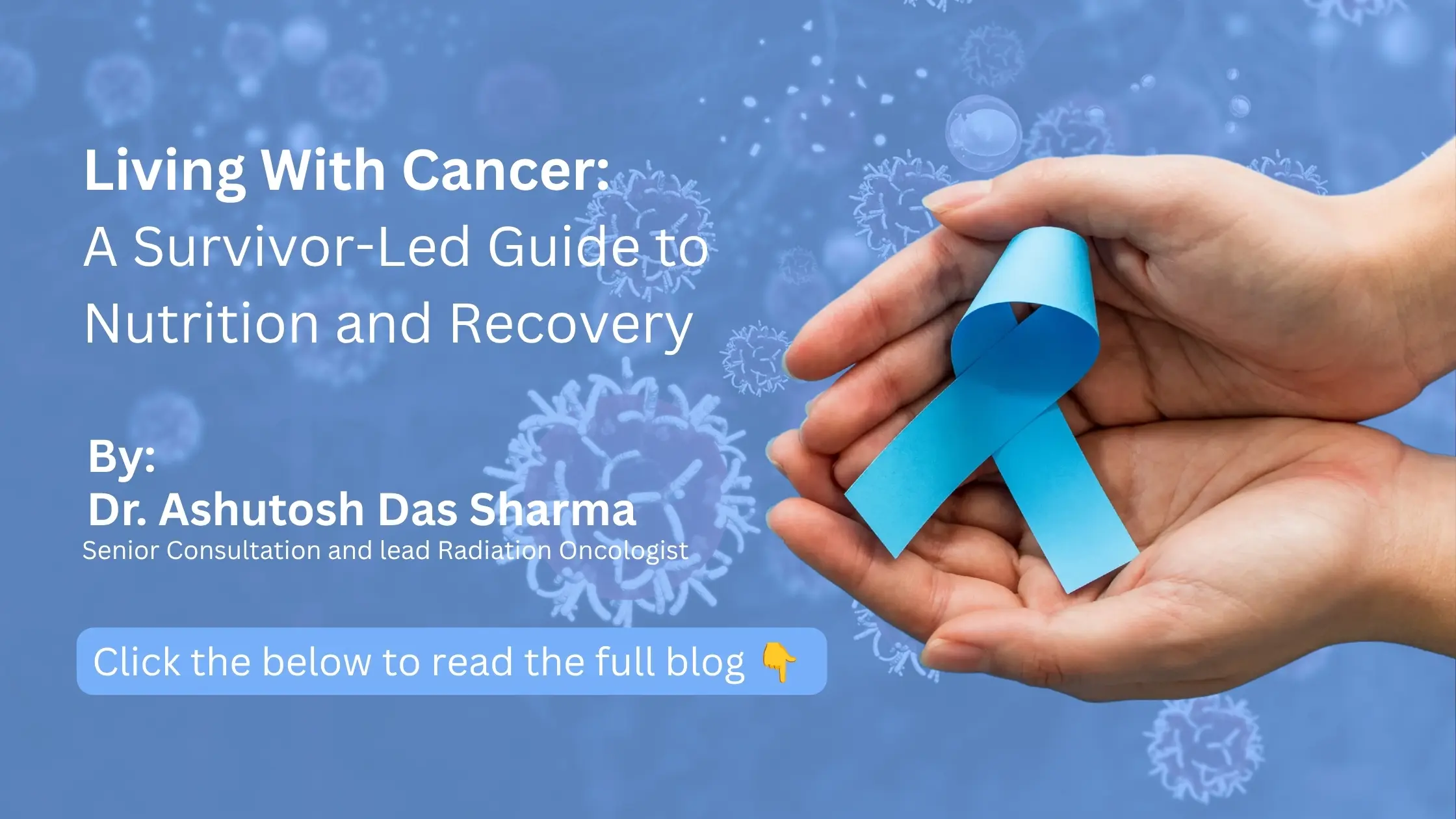
Living With Cancer: A Survivor-Led Guide to Nutrition and Recovery
Other Blogs
यह ब्लॉग हिंदी में भी उपलब्ध है
When Treatment Ends — The Real Journey Begins
In my years of practice as a Radiation Oncologist at the American Oncology Institute (AOI-BCR), Jora, Raipur, I have had the privilege of sitting across from hundreds of cancer survivors. Each one has taught me something that no textbook could.
The most common thing they tell me — and it is almost always said with quiet surprise — is this: "Doctor, nobody told us what to do after treatment."
This blog is my attempt to change that. Drawing from the experiences of survivors I have treated across Raipur, Durg, Bilaspur and Chhattisgarh — and from the medical evidence — here is what life during and after cancer treatment actually looks like, and what helps most.
What Cancer Treatment Does to the Body
Before we talk about recovery, it helps to understand what the body goes through during treatment. Whether a patient undergoes surgery, chemotherapy, radiation, or a combination — the body expends enormous energy fighting both the cancer and the treatment itself.
Common effects that impact nutrition and recovery include:
- Loss of appetite — almost universal during chemotherapy and radiation
- Nausea and vomiting — especially during chemotherapy cycles
- Mouth sores (mucositis) — common with head-neck radiation, making eating painful
- Fatigue — often the most persistent and underestimated side effect
- Weight loss and muscle wasting — the body breaks down muscle for energy when intake is inadequate
- Weakened immunity — particularly during chemotherapy cycles
- Changes in taste and smell — making familiar foods unappetising
Understanding these effects helps patients and families prepare — and reduces the panic when they occur.
Nutrition During Cancer Treatment — What Actually Helps
There is no single "cancer diet." What works depends on the type of cancer, the treatment being given, and the individual patient. However, there are evidence-based principles that apply broadly:
1. Prioritise protein above all else
Protein is the building block the body needs for tissue repair, immune function, and maintaining muscle mass during treatment. Good sources in an Indian diet include: dal, paneer, eggs, fish, chicken, curd, rajma, and soya. Aim for protein at every meal — even small amounts matter when appetite is low.
2. Eat small, frequent meals
Three large meals become impossible for most patients during treatment. Six to eight small meals — spaced every 2–3 hours — are far easier to manage and maintain caloric intake. Even a small bowl of khichdi, a cup of dahi, or a glass of buttermilk counts.
3. Do not force eat — but do not skip entirely
Forcing large amounts when nauseous is counterproductive. But completely skipping meals for hours accelerates weight loss and fatigue. Find the middle ground — something light, something gentle on the stomach, something the patient genuinely wants.
4. Hydration is non-negotiable
Chemotherapy and radiation both dehydrate the body. Aim for 8–10 glasses of fluid a day — water, coconut water, nimbu paani, dal water, rice water, and light soups all count. Dehydration worsens fatigue, nausea, and kidney strain during treatment.
5. Avoid raw foods during chemotherapy cycles
When immunity is suppressed — typically in the days immediately following a chemotherapy dose — raw salads, unpeeled fruits, and undercooked foods carry a higher infection risk. Cooked, freshly prepared food is safer during this window.
6. Monsoon-specific caution for Raipur patients
For patients currently in treatment during July–September — the monsoon season in Chhattisgarh brings additional risks: contaminated water, food-borne infections, and increased humidity that can worsen mucositis and wound care. Boiled or filtered water only. Avoid street food entirely during active treatment cycles.
What Survivors Tell Me Helped Most
Over the years, I have asked survivors the same question: "What helped you get through it?" Here is what comes up most consistently — beyond the medical treatment itself:
"Having one person who took charge."
Almost every survivor mentions a family member — a spouse, a sibling, a child — who became their primary support: accompanying them to appointments, managing medications, preparing food, and handling communication with the medical team. Cancer treatment is not a solo journey. The family member who steps up is as important to recovery as the medicine.
"Knowing what to expect before it happened."
Patients who were well-briefed — who knew that hair loss was coming, that nausea would peak on certain days, that fatigue was temporary — coped significantly better than those who encountered each side effect as a surprise. At AOI-BCR Raipur, we invest time in preparing patients and families before each treatment cycle begins. Ask your oncologist what to expect — before it happens.
"Keeping a small routine."
Even during the hardest weeks of treatment, survivors who maintained even a minimal daily structure — a specific time to wake up, a short walk, a set time for meals — reported better mental resilience. Cancer treatment can feel like it takes over your entire life. A small routine is a way of reclaiming a corner of it.
"Not going down the internet rabbit hole."
This one is said with a rueful smile by almost every survivor. The internet offers statistics, forums, and stories — many of them frightening, few of them relevant to any individual patient's situation. The survivors who did best were those who asked their oncologist directly, rather than searching online at midnight.
Life After Treatment — Recovery Is Not Linear
Many patients expect that when treatment ends, they will feel immediately better. This is rarely the case — and the gap between expectation and reality can be distressing.
Recovery from cancer treatment typically follows this pattern:
- Weeks 1–4 after treatment: The body continues to process the effects of treatment. Fatigue often peaks in this period, not during treatment itself. Rest is essential.
- Months 1–3: Appetite and energy gradually return. Hair begins to regrow. Most patients begin light physical activity — walking is the safest and most effective starting point.
- Months 3–6: Most patients return to a version of their normal routine. Immunity strengthens. Follow-up imaging and blood work begins in earnest.
- Year 1 and beyond: Regular monitoring continues. Emotional adjustment — coming to terms with the cancer experience — often happens in this phase, sometimes with the help of counselling.
Recovery is not a straight line. There will be good weeks and difficult weeks. The goal is a trend — not a perfect graph.
Follow-Up Care Is Not Optional
One of the most critical — and most neglected — aspects of cancer survivorship in Chhattisgarh is follow-up care. Many patients, once they feel better, stop coming for their scheduled appointments.
This is a dangerous pattern. Follow-up visits are how we:
- Detect recurrence early — when it is still treatable
- Monitor long-term side effects of treatment
- Adjust medications and supplements
- Provide reassurance and address new concerns
At AOI-BCR Raipur, every patient receives a personalised follow-up schedule based on their cancer type and treatment. Please keep these appointments — even when you feel completely well. Especially when you feel completely well.
A Message to Families in Raipur and Chhattisgarh
If someone in your family is currently in cancer treatment — or has recently completed it — please know that recovery is possible. Not just survival, but a meaningful, active, connected life.
The survivors who do best are not necessarily those with the mildest cancer. They are those with the most committed support systems, the most consistent follow-up, and the most honest communication with their oncologist.
You do not need to go to Mumbai for that. You do not need to navigate this alone. The team at AOI-BCR, Jora, Raipur is here — for every step of this journey.
The Message
"Recovery from cancer is not just about the medicine. It is about nutrition, routine, family, follow-up — and the belief that life after cancer is worth fighting for."
If you or a family member is navigating cancer treatment or recovery — do not do it alone. Personalised cancer care in Raipur is available. Come and see us.
— Dr. Ashutosh Das Sharma, Radiation Oncologist, AOI-BCR, Jora, Raipur